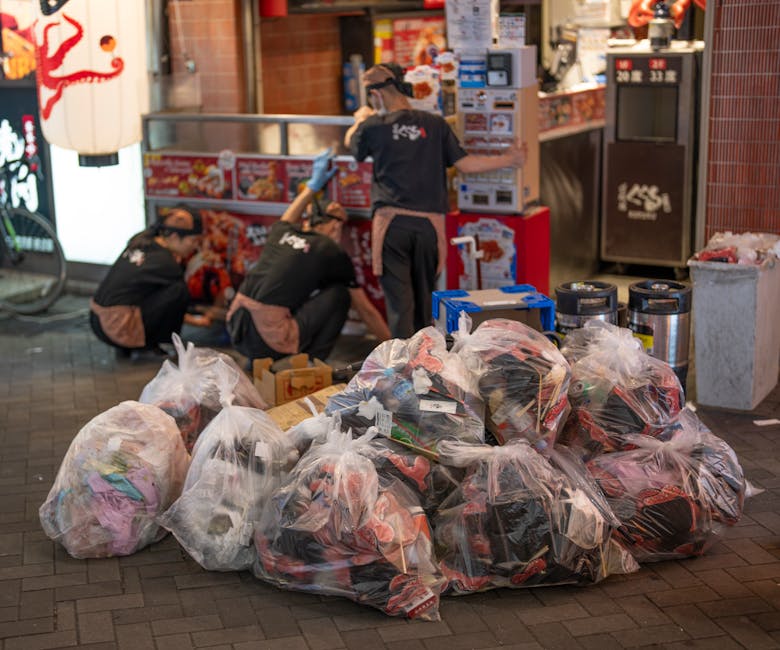
Shop waste clearance Old Spitalfields Market rubbish removal: a practical guide for busy traders and managers
If you run a shop near Old Spitalfields Market, you already know the rhythm. Deliveries arrive early, shoppers want clear aisles, and the back room fills up faster than anyone expects. Then suddenly there's broken packaging, old display stock, flat-packed furniture, worn signage, and a pile of mixed rubbish that cannot just sit there until next week. That is where Shop waste clearance Old Spitalfields Market rubbish removal becomes less of a nice-to-have and more of a very real operational need.
This guide explains how shop waste clearance works, what it is best used for, what to avoid, and how to choose the right clearance method for your space. You will also find practical steps, a checklist, a comparison table, and plain-English guidance on compliance and safe disposal. Nothing fluffy. Just the sort of advice that helps on a busy weekday when the shop floor is short of space and you need the waste gone properly.
Why Shop waste clearance Old Spitalfields Market rubbish removal Matters
Retail waste is not just "stuff to throw away". In a market setting, it affects presentation, safety, stock handling, and customer experience all at once. A back-of-house pile of cardboard may seem harmless for a day or two, but it can quickly become a trip hazard, block fire routes, attract pests, and make stock rotation harder than it needs to be. Not ideal when footfall matters and the shop is open to the public.
Old Spitalfields Market has its own character: a mix of independent retail, pop-ups, food traders, and small businesses working in compact spaces. That means waste clearance has to be efficient, tidy, and realistic for tight access. You cannot always rely on a large skip sitting outside for long. Sometimes the smarter answer is a planned collection, a wait-and-load approach, or a same-day removal that keeps disruption to a minimum.
There is also a presentation issue. Let's face it, customers notice clutter. They may not comment, but they will notice if the stockroom spills into the service area or if old packaging lingers by the door. A clean shop usually feels calmer, more organised, and more trustworthy. That matters more than people admit.
Expert summary: Good shop waste clearance is about more than removing rubbish. It protects trading space, reduces risk, helps staff work faster, and keeps your business looking sharp in a busy market environment.
How Shop waste clearance Old Spitalfields Market rubbish removal Works
In practical terms, shop waste clearance usually starts with a quick assessment of what needs removing, how much there is, and how accessible the premises are. A small shop on a busy street has different needs from a larger retail unit with a rear service yard. The method chosen should fit the location, not the other way around.
Most clearances follow a simple pattern:
- Identify the waste type. Cardboard, broken shelving, display units, packaging, old stock, confidential paperwork, fixtures, and mixed rubbish may all need different handling.
- Check access. Is there loading space? Are there time restrictions? Can a vehicle stop nearby without blocking traders or pedestrians?
- Choose the method. Depending on the job, this may be rubbish removal, wait and load skip hire, man and van, or another suitable service.
- Separate sensitive or restricted waste. Some items cannot go into general mixed waste. If there are electronics, fridges, confidential files, or anything hazardous, those streams need to be handled separately.
- Load and remove. The removal team clears the waste, leaving the shop ready for trading, refit, or a deeper clean.
- Sort for recycling where possible. Responsible clearance should aim to divert recyclable materials away from landfill whenever practical.
For many businesses, the real convenience comes from flexibility. Some clearances are done before opening hours. Others happen after close, when the shop floor is quiet and no one is weaving around trolleys. A good provider will understand that timing matters just as much as lifting and loading.
If your waste is mostly cardboard and packaging, the task can be fairly simple. If you are clearing old displays, mannequins, storage racking, broken equipment, and a few mystery items that nobody wants to claim, the job becomes a bit more involved. That is normal.
Key Benefits and Practical Advantages
Shop waste clearance done properly gives you more than a tidy back room. It supports day-to-day trade in ways that are easy to miss until the waste starts piling up again.
- Better use of space: Stockrooms and prep areas work better when they are not doubling as rubbish storage.
- Cleaner customer impression: A neat shopfront and uncluttered interior feel more professional.
- Improved safety: Less clutter means fewer trip risks, fewer blocked walkways, and easier emergency access.
- Faster staff movement: Employees waste less time navigating around boxes and broken items.
- More control over waste streams: You can separate recyclable materials, confidential papers, electrical items, and general rubbish more sensibly.
- Reduced stress during refits or stock changes: Seasonal changeovers and re-merchandising are easier when waste is removed promptly.
There is also a business rhythm benefit. Waste tends to build up in bursts: after deliveries, after a sale season, after a delivery issue, or when old fixtures are being replaced. Fast removal helps you reset the shop without dragging the mess through another trading day. To be fair, that calm reset can feel like a small miracle when the week is already packed.
If you are choosing between waste clearance and a more traditional skip hire route, the right decision often depends on space, time, and how much labour you want to handle yourself. For a compact site, service-led removal may be far simpler than trying to manage a skip and load it over several days.
Who This Is For and When It Makes Sense
This kind of clearance is useful for far more than a dramatic shop closure. In everyday retail life, it crops up constantly.
It makes sense if you are:
- refreshing a retail unit before a relaunch
- clearing old stock, damaged items, or end-of-line packaging
- removing broken counters, shelving, or display units
- preparing for a refit or new tenant handover
- dealing with bulky waste in a small, hard-to-access shop
- managing waste after a busy trading period
- handling mixed commercial rubbish that cannot just go in the bin
Some shop owners assume waste clearance is only needed for big strip-outs. In reality, many calls come from routine pressure points: a pile of cardboard that has grown legs, a burst storage cupboard, or a back room that is no longer practical to work in. It happens. Usually at the worst time, too.
For larger retail or multi-unit premises, the need may lean more towards ongoing commercial support. In that case, commercial skip hire or scheduled disposal arrangements can make life much easier. For smaller jobs, a direct collection may be more efficient and less disruptive.
Step-by-Step Guidance
Here is a straightforward way to organise a shop waste clearance without making it harder than it needs to be.
- Walk the space first. Look at the shop floor, stockroom, cellar, and any rear access point. Make a quick note of bulky items, loose rubbish, and anything that might need special handling.
- Separate what can be recycled. Cardboard, clean plastics, and some metals may be suitable for recycling. Keeping them separate early saves time later.
- Identify anything restricted. Fridges, screens, IT equipment, paint, chemicals, sharps, or confidential material should never be mixed in casually. If in doubt, isolate it.
- Decide whether you need labour or just transport. If the waste is already piled and bagged, removal may be quick. If staff need help carrying it out of a basement or up from a cramped storeroom, plan for that.
- Pick the right disposal method. A skip may suit ongoing refurb work, while wait and load skip hire is often better where space is tight and time on street needs to be short.
- Book around trade hours. Early morning or after close can reduce disruption. Sometimes a two-hour window is all you need. The timing is often the difference between "fine" and "chaotic".
- Make access clear. Move stock trolleys, unlock gates, and ensure someone can point the team to the right entrance. A few minutes of prep saves a lot of faffing about.
- Check the final sweep. Once the waste is removed, do one last check for missed packaging, loose screws, cable ties, or small debris.
A quick tip: if you are clearing a retail space before a fit-out, take photos before removal starts. Not for drama. Just for reference. It helps if you need to confirm what was in place, what was removed, and what remains to be done.
Expert Tips for Better Results
In our experience, the best shop clearances are the ones planned with a little realism. You do not need a perfect plan. You just need the right plan for a busy commercial space.
- Clear in zones, not randomly. Start with the biggest obstruction first, then work through smaller items. That gives the room breathing space quickly.
- Keep recycling visible. A few labelled piles or bags can stop clean cardboard drifting into general rubbish.
- Use enclosed options where presentation matters. If waste is being stored temporarily in view of the public, enclosed and lockable skip hire can help keep things neater and safer.
- Plan for mixed waste honestly. Shops generate a mixture of packaging, plastics, fittings, and broken items. Do not assume everything is light just because it looks small.
- Ask about recycling routes. A responsible provider should be able to explain how materials are sorted, even if the answer is simple rather than glamorous.
- Keep one person in charge. One point of contact avoids crossed wires. Otherwise three people say "that pile stays" and one says "no, remove it". Slightly maddening, but common.
Another useful habit is to review waste after stock changes. Seasonal lines, window displays, and packaging from delivery peaks often create more rubbish than the team expects. A short monthly tidy-up can prevent a bigger mess later.
Common Mistakes to Avoid
Most problems with shop waste clearance are not dramatic. They are small planning mistakes that snowball.
- Leaving waste too long: Bags and boxes left for days become harder to manage and can affect the customer area.
- Mixing restricted items into general rubbish: That can cause disposal issues and unnecessary risk.
- Underestimating volume: A "small tidy" often turns into several van loads once everything is pulled out.
- Ignoring access constraints: Narrow entrances, loading restrictions, and stair access matter more than people think.
- Not checking what is included: Some services are better for bulky mixed waste, others for cleaner commercial rubbish.
- Forgetting confidentiality: Shops sometimes dispose of paperwork, labels, and staff records without a proper shredding route. That is a mistake worth avoiding.
One of the most common oversights is assuming a skip is automatically the best answer. Sometimes it is. Sometimes it really is not. If the waste needs removing quickly, or there is no safe place to keep a skip, a fast collection service may be much more practical.
Tools, Resources and Recommendations
You do not need a warehouse full of equipment to manage shop waste well. A few simple tools make the job easier and cleaner.
- Heavy-duty sacks: Better for mixed light waste than thin bags that split halfway down the stairs.
- Labelled containers: Useful for separating cardboard, plastics, and general rubbish.
- Box cutters and tape: Small tools, but they save time during packing and flattening.
- Wheeled cages or dollies: Helpful when moving stockroom waste through narrow spaces.
- Gloves and sensible footwear: Basic, but not optional if you are handling awkward items.
- Removal options matched to the job: man and van suits smaller clearances; grab hire services can be useful for larger or awkward loads; and rubbish removal is often the most straightforward all-round option for shops.
If your clearance involves appliances or display equipment, it is worth checking whether specialist handling is needed. Items like old fridges, coolers, or retail tech should not be treated like ordinary mixed rubbish. For those jobs, services such as fridge and appliance removal may be more appropriate.
For shops with paperwork, account records, or other sensitive documents, confidential shredding is a safer route than trying to "just bin it". That little detail can save a lot of trouble.
Law, Compliance, Standards, or Best Practice
Commercial waste has to be managed responsibly. In the UK, businesses have a duty to ensure their waste is handled by a suitable carrier and disposed of correctly. You do not need to become a legal expert just to clear a shop, but you do need to avoid casual disposal habits that put the business at risk.
Best practice usually means:
- keeping clear records of waste removal when appropriate
- separating recyclable and non-recyclable materials where practical
- avoiding contamination of waste streams
- checking that hazardous items are dealt with through the right route
- using a provider that understands commercial waste handling and safety
Health and safety should also stay front and centre. Clear walkways, sensible lifting, and controlled access all matter in compact retail environments. If staff are moving waste before collection, make sure the work is not creating a risk for them or for customers. A tidy clearance that causes an injury is no win at all.
For larger or more complex jobs, it can help to review a provider's health and safety policy, insurance and safety approach, and waste recycling services commitment before booking. That is simply good business sense.
Options, Methods, or Comparison Table
Choosing the right removal method depends on access, waste volume, time pressure, and how much you want the team to handle for you. Here is a simple comparison.
| Method | Best for | Advantages | Watch-outs |
|---|---|---|---|
| Rubbish removal | Mixed shop waste, packaging, fixtures, small clearances | Fast, flexible, minimal disruption | May not suit very large ongoing refurb jobs |
| Wait and load skip hire | Short-term clearances with tight access | No long-term skip sitting outside, good for busy streets | Needs the waste ready on arrival |
| Skip hire | Refits, repeated waste over several days | Handy for bigger jobs, easy to load over time | May need space and possibly a permit |
| Man and van | Smaller jobs, quick collections, awkward access | Simple and adaptable | Less suitable for heavy bulk waste |
| Grab hire | Bulkier loads or heavier clearance needs | Efficient for large volumes | Access and loading conditions must suit the vehicle |
For many shops near Old Spitalfields Market, the winner is usually whichever option removes waste fastest without disrupting customers. That sounds obvious, but it is often the real deciding factor. If the street is tight and the shop is trading, convenience matters a great deal.
Where a skip is the best fit, you may also want to check skip sizes and prices and whether a permit could be needed through skip permits or skip hire permits. That avoids the awkward "we thought it was sorted" moment. Nobody enjoys that one.
Case Study or Real-World Example
Picture a small retail unit close to the market. The business is preparing for a weekend refresh. Old display plinths need removing, several bags of packaging are sitting in the stockroom, and there are boxes of damaged seasonal items that have been taking up space for weeks. Nothing outrageous on its own. But together it is enough to make the shop feel cramped and untidy.
Rather than trying to squeeze everything into a few bins over multiple days, the team separates the waste into broad groups: cardboard, mixed rubbish, and bulky items. The collection is booked for early morning, before the doors open. The waste is removed in one go, the floor is swept, and the shop is ready for trading by the time the first customers arrive.
What changed? Not magic. Just timing, a realistic method, and a clear idea of what needed to go. It is a simple example, but those simple jobs are often the ones that make the biggest difference to the day.
In a slightly larger refit, the needs may shift toward builders skip hire or construction waste disposal, especially where fixtures, partitions, or heavier refurbishment materials are involved. That is where the line between retail waste and light construction waste starts to blur a bit.
Practical Checklist
Use this checklist before arranging a shop clearance. It keeps the job tighter and usually cheaper too.
- Identify exactly what needs removing.
- Separate cardboard, recyclables, and general waste.
- Set aside confidential, electrical, or hazardous items.
- Check the shop access, stairs, loading area, and timing limits.
- Decide whether you need labour, transport, or both.
- Choose the most suitable method for the space.
- Confirm the collection window and who will meet the team.
- Clear the route so removal can happen safely.
- Inspect the space after clearance and sweep up leftovers.
- Keep any records you need for business or compliance purposes.
If you are unsure what can go where, it is worth reviewing what can go in a skip before loading anything yourself. It is a small step, but it prevents a lot of avoidable back-and-forth.
Conclusion
Shop waste clearance around Old Spitalfields Market is really about keeping a busy retail space workable, safe, and presentable. When waste is managed well, staff move more easily, customers see a better first impression, and the business can focus on trading rather than tiptoeing around clutter. The right method depends on access, volume, timing, and the type of waste involved - and in this part of London, those details matter.
For many shop owners, the smartest next step is a simple one: look at the waste honestly, decide what needs specialist handling, and choose a removal method that fits the space rather than forcing the space to fit the waste. That little bit of planning pays off quickly.
Get a free quote today and see how much you can save.
And if you are still weighing up options, take your time, but do not leave the mess to become the problem. A tidy shop has a way of making everything else feel more manageable.
Frequently Asked Questions
What is shop waste clearance in simple terms?
It is the removal of rubbish, packaging, bulky items, and other waste from a retail unit, stockroom, or shopfront. The idea is to clear the space safely and efficiently without disrupting trade more than necessary.
Is shop waste clearance different from regular rubbish removal?
Yes, often it is. Shop waste can include display fixtures, packaging, confidential items, and mixed commercial rubbish, so the approach needs to fit a trading environment rather than a household one.
What kinds of waste are commonly removed from shops?
Common items include cardboard, plastic packaging, damaged stock, old shelving, signage, hangers, broken display units, and general commercial waste. Sometimes there are fridges, screens, or confidential paperwork too.
Do I need a skip for a shop clearance?
Not always. If access is tight or you only need a quick clearance, a wait-and-load or direct removal service may be better. A skip is useful when waste builds up over several days or during a refit.
Can shop waste be removed outside trading hours?
Usually yes, and that is often the best approach. Early morning or after closing can reduce disruption, which is handy in a busy market setting where every hour counts.
What should I do with confidential documents from the shop?
They should be kept separate and sent for proper destruction, not mixed into general rubbish. Confidential shredding is the safer route.
Are old shop fridges or appliances treated differently?
Yes. Appliances often need specialist collection and disposal, especially if they contain refrigerant or other components that should not be handled as normal waste.
How do I know if my waste contains hazardous material?
If it includes paint, chemicals, cleaning products, aerosols, batteries, or similar items, treat it carefully and separate it. When in doubt, get advice before mixing it with other waste streams.
What is the best option for a small shop with limited access?
For many small units, man and van or wait and load skip hire works well because it avoids long-standing waste storage and suits compact spaces.
How can I make shop waste clearance faster?
Sort the waste first, keep access clear, separate restricted items, and have one person responsible for the handover. A few minutes of prep can save a surprising amount of time.
Do I need to worry about permits for a skip?
Possibly, if the skip is placed on a public road or another controlled space. It is worth checking skip permits or skip hire permits before booking.
How do I choose between skip hire and rubbish removal?
Choose skip hire if you have room and expect a steady flow of waste. Choose rubbish removal if you need a quick, hands-off solution with less disruption. The best option is the one that fits the site, not just the waste pile.
Can waste clearance help during a shop refit?
Absolutely. It is one of the cleanest ways to remove old fittings, packaging, and strip-out waste as the work progresses. For heavier jobs, it may pair well with builders waste removal or related disposal support.
What should I check before booking a clearance provider?
Check the type of waste they handle, how they manage recycling, whether they understand commercial access issues, and whether they offer the timing you need. A good provider should make the process feel straightforward, not confusing.
If you want to keep the whole process simple, it helps to work with a team that understands commercial waste, access challenges, and the pace of trading around Spitalfields. A bit of calm planning goes a long way, honestly.